Requirement review
Product, dimensions, quantity and use.
 KAIXIANG PACKAGINGKaixiang Packaging · Paper packaging
Home / Customization
CUSTOMIZATIONWe review packaging structure, paper materials, printing and finishes with you. To start an enquiry, send the product dimensions, intended use and estimated quantity. Include artwork or a reference photo if available.
Tell us your needs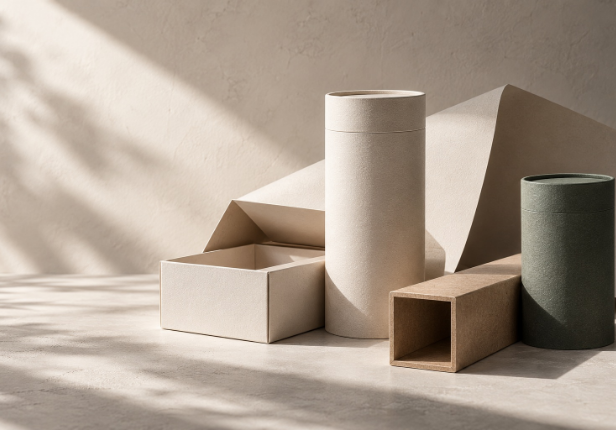
WORKFLOW
Product, dimensions, quantity and use.
Confirm material, fit and appearance.
Confirm specs, artwork and agreed requirements.
Produce and deliver to the confirmed brief.
MATERIALS & CRAFT
The product, how it will be handled and what you want customers to see guide the choices we review at the sample stage.
Share the product dimensions and how it should be packed or opened. Let us know if it needs an insert or extra support.
Tell us what the pack needs to protect, its packed weight and whether it will be used for display, storage or shipping.
Send your artwork or brand colours if available. Tell us which surfaces need printing and what finish you want to review on the sample.
Compare the effects on paper packaging before choosing a finish. Mark the area on your artwork and share a reference if you have one.

A flat metallic finish that catches the light on a logo or pattern.

Clear gloss highlights selected areas against a matte surface.

Metallic foil and a raised pattern combine for visual and tactile detail.
AI-generated illustrations of print finishes on paper. Confirm the paper, placement and finish on a physical sample.
Embossing and debossing. Embossing raises a design above the paper surface, as shown in the foil and embossing close-up. Debossing presses a design below the paper surface.
Paper and box style. For folding cartons, tell us if the finish is close to a fold. For paper-wrapped rigid boxes, specify the panel and wrap paper. Tell us if the surface is smooth, textured or laminated. Check the finish on a sample made with the intended paper and surface treatment.
Mark each finish on the artwork. If you have an editable file, put each finish on its own labelled layer, such as Gold Foil, Spot UV, Embossing or Debossing. Include a marked PDF or image that shows the box panel and exactly where each finish should go.
What to check on a sample. Compare the sample with your artwork under normal lighting. Check the colour and position, then look at foil coverage, gloss and the depth of raised or recessed details where applicable. Fold and close the sample to check how the finish behaves near creases.
What is the difference between spot UV and hot foil stamping? Spot UV adds clear gloss to selected areas and lets the printed colour show through. Hot foil stamping applies metallic foil, such as gold, to a logo, lettering or pattern.
Can gold foil stamping and embossing be combined? Yes. Gold foil can highlight a raised pattern, as shown in the third illustration. Mark the areas that should be both foiled and raised, and share the paper and design size. On the sample, check that the foil aligns with the raised design.
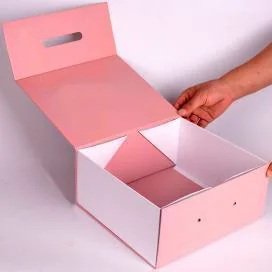
The open box shows the inside corner folds. For a similar box, share the packed product dimensions and whether you need an insert.
View catalogue reference B-06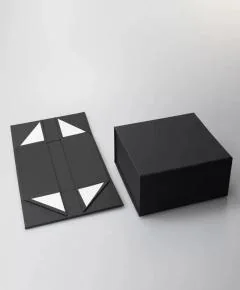
The catalogue shows this style laid flat and with its lid closed. Share the size of the folded garment and how the boxes will be stored.
View catalogue reference B-02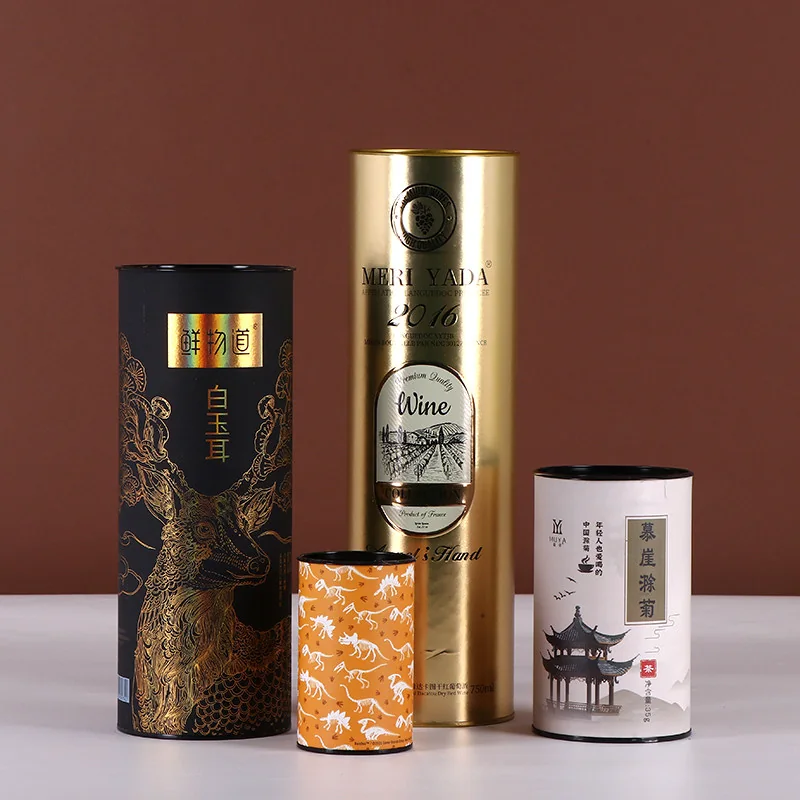
This catalogue example shows a paper can for tea gift packaging. Share your intended diameter, height, lid style and how the tea will be packed inside.
View catalogue reference A-04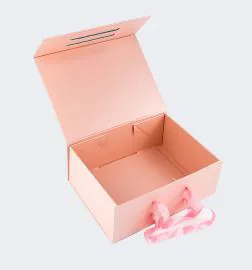
The open box shows the lid, interior and front ribbon. Specify the closure and whether the ribbon should form part of the opening.
View catalogue reference B-01Tell us about your product and requirements. Start with a clear conversation.